



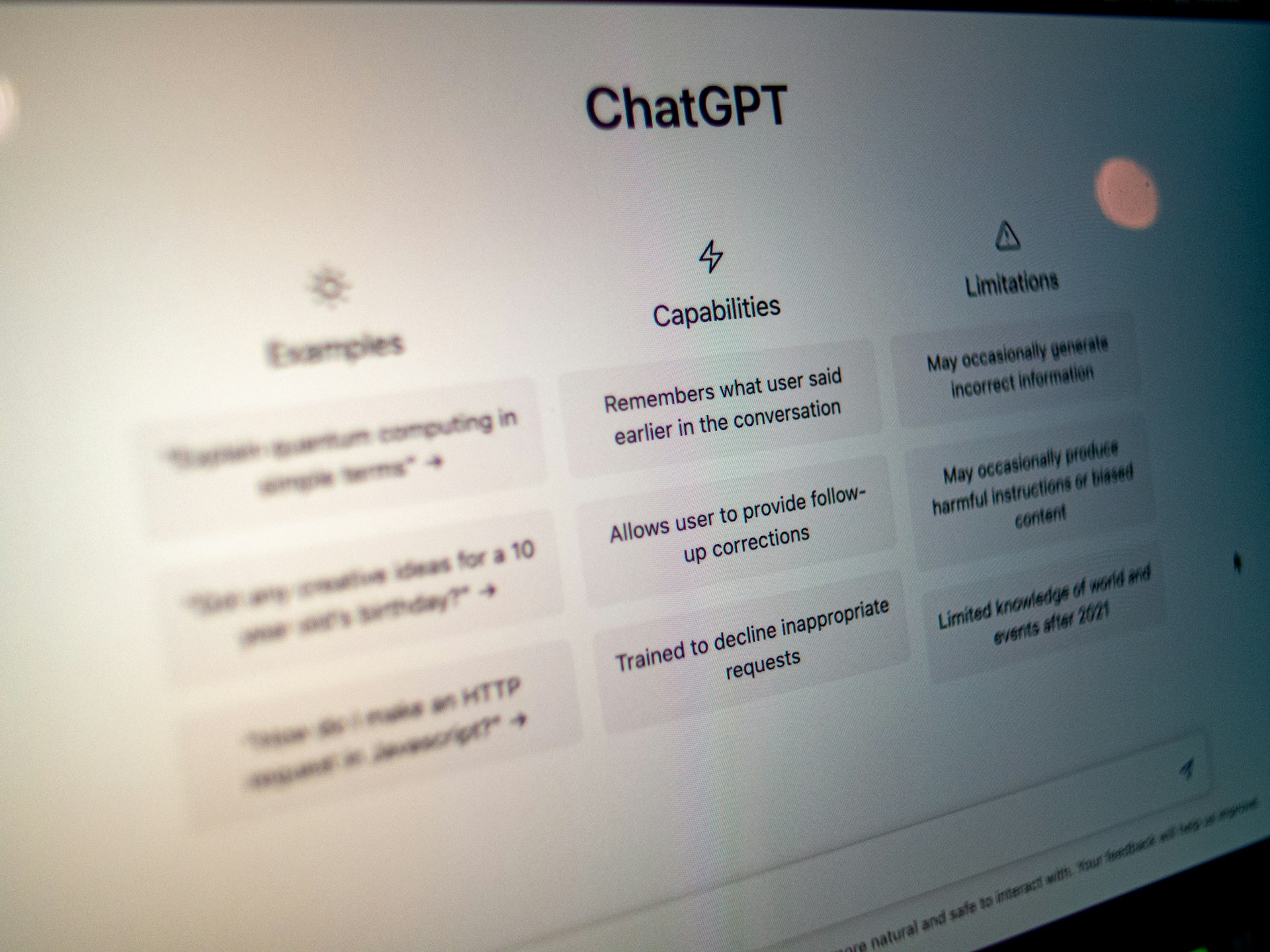
Since OpenAI launched ChatGPT in November 2022, the question of brand visibility inside AI-generated answers has become one of the most pressing challenges in digital strategy.
Unlike traditional search engines, ChatGPT doesn’t display a ranked list of blue links — it synthesizes information and either mentions your brand or it doesn’t.
That binary reality forces marketers and supply chain professionals alike to rethink how they measure presence. According to a 2025 BrightEdge study, over 68% of enterprise marketers reported having no reliable method to track their brand mentions inside large language model outputs. That gap is significant — and entirely fixable.
Understanding what “”visibility in ChatGPT”” actually means
Before diving into tools, it’s worth clarifying what you’re actually measuring. Visibility in ChatGPT doesn’t follow the same logic as a Google ranking. There’s no position 1 or page 2. What matters is whether ChatGPT cites, recommends, or describes your brand, product, or website when users ask relevant questions.
Think of it as share-of-voice inside a conversational engine rather than a keyword rank.
This distinction has real consequences. If you source products from Asia and your sourcing platform isn’t mentioned when someone asks ChatGPT “”best procurement tools for China sourcing,”” you’re effectively invisible to a growing segment of decision-makers.
The metric to track is therefore mention frequency and context quality — not clicks or impressions.
Three core dimensions define ChatGPT visibility :
- Brand recall rate : how often your brand appears in responses to targeted prompts
- Sentiment accuracy : whether the model describes your offer correctly and positively
- Contextual relevance : in which type of queries does your brand get surfaced
Mapping these three dimensions gives you a baseline visibility score that you can track over time, much like you would monitor KPIs on a supply chain dashboard — where every data point feeds a broader picture of performance.
Practical methods and tools to monitor your ChatGPT presence
The good news : a structured workflow can make AI visibility tracking both systematic and actionable. The process starts with prompt engineering — designing a set of 20 to 50 representative queries that your target audience would realistically type into ChatGPT.
These should cover product categories, use cases, and comparison questions.
Once your prompt library is built, you can use dedicated tools to automate the tracking. Profound (launched in 2024) and Otterly.AI are two platforms specifically designed to monitor brand mentions across AI chat interfaces including ChatGPT, Perplexity, and Gemini.
They run your prompts at scheduled intervals and flag when your brand appears — or disappears — from responses.
| Tool | ChatGPT support | Sentiment analysis | Pricing (2025) |
|---|---|---|---|
| Profound | Yes | Yes | From $299/month |
| Otterly.AI | Yes | Partial | From $49/month |
| Manual prompt audit | Yes | Manual | Free |
For teams managing complex supplier ecosystems, manual prompt audits remain surprisingly effective when resources are tight. A weekly review of 15-20 targeted prompts, logged inside a shared spreadsheet with date, prompt, response excerpt, and mention flag, creates a lightweight but functional monitoring system.
It’s the same discipline you’d apply when tracking supplier compliance across multiple tiers — consistency beats perfection.
One common mistake : running prompts only once and drawing conclusions. ChatGPT responses vary due to model updates and probabilistic generation. Run each prompt a minimum of three times per session and average the results to get a reliable signal.
Improving your visibility score once you’ve measured it
Tracking is only half the work. Once you identify gaps — say, ChatGPT recommends a competitor when asked about end-to-end procurement visibility — you need a clear action plan to close them.
The mechanism behind ChatGPT’s brand mentions is closely tied to what the web says about you at scale.
ChatGPT’s training data and browsing-enabled responses both rely heavily on high-authority, frequently cited content. Publishing detailed case studies, contributing to recognized industry publications, and earning backlinks from domain-authority sites all feed the model’s understanding of your brand.
A sourcing platform with a well-documented dashboard methodology, for instance, becomes more likely to surface when users ask about supply chain transparency tools — because the language around it appears repeatedly in credible sources.
Three actionable levers to improve AI visibility :
- Publish structured, semantically rich content that matches the exact language your audience uses in ChatGPT queries
- Get mentioned in listicles, reviews, and comparison articles on third-party sites with strong domain authority
- Use schema markup and FAQ sections on your website to make your content easier for AI crawlers to parse and reference
Tracking progress on these levers requires the same iterative mindset as optimizing a procurement workflow : set a baseline, apply changes, re-measure after 30 to 60 days, and adjust.
Visibility in AI engines isn’t static — model updates (like GPT-4o’s rollout in May 2024) can shift brand mentions overnight, which makes continuous monitoring non-negotiable.
Building a repeatable visibility monitoring workflow
The most overlooked aspect of ChatGPT visibility tracking is workflow design. Most teams run sporadic checks with no documentation — which makes trend analysis impossible. A repeatable system changes that entirely.
Start by centralizing all prompt results in a single dashboard, whether that’s a dedicated tool like Profound or a well-structured Google Sheet. Tag each response with mention type (cited, described, compared, absent), date, and model version.
Over three months, patterns emerge clearly : which content gaps are hurting you, which competitors are gaining ground, and which query clusters you already own.
This kind of structured visibility data feeds better decisions — about content investment, PR strategy, and even product positioning.
Teams managing international supply chains know this instinctively : without a centralized view of all moving parts, reactive firefighting replaces strategic planning.
The same logic applies to AI visibility. Build the dashboard first, then optimize relentlessly.